Imagine returning home after a heavy rainstorm in Daytona Beach to find water pooling in your living room, only to realize it’s seeping into walls and floors you can’t even see. Water damage doesn’t just stay put-it travels fast, turning a minor leak into a major disaster. In Florida’s humid climate, where storms and high moisture levels are common, this issue strikes frequently, leading to mold growth, structural weakening, and thousands in repair costs. At Daytona Beach Water Damage, we’ve responded to countless calls from homeowners in areas like Midtown Daytona facing this exact problem. This guide breaks down how water damage spreads through a home, why it happens so quickly, and what you can do to stop it. By understanding these processes, you’ll be equipped to act swiftly and minimize the destruction, potentially saving your home and your wallet.
How Water Damage Spreads: The Invisible Pathways in Your Home
Water damage spreads through a home in ways that are often invisible until it’s too late, exploiting the very materials designed to protect us. At its core, water seeks the path of least resistance, infiltrating porous surfaces like drywall, wood, and insulation while gravity pulls it downward. In Florida homes, this is amplified by the state’s subtropical environment, where high humidity and frequent rains create ideal conditions for rapid proliferation.
The process begins with the initial intrusion-perhaps from a burst pipe, roof leak, or flooding. Once inside, water doesn’t evaporate instantly; it absorbs into building materials. Drywall, for instance, can hold up to 15% of its weight in water before sagging, allowing moisture to wick upward through capillary action. Wood framing swells and warps, creating gaps for further spread. And don’t forget HVAC systems, which can circulate damp air, distributing moisture to distant rooms.
Here’s a breakdown of the key ways water damage propagates:
- Gravity-Driven Flow: Water naturally flows downward, soaking carpets, subfloors, and crawlspaces. In older Daytona Beach homes with concrete slab foundations, it can pool under the house, leading to erosion over time.
- Capillary Action: Moisture climbs up walls and materials like a sponge, spreading horizontally and vertically. This is why a small bathroom leak can affect adjacent bedrooms.
- Vapor Diffusion: Warm, humid air carries water vapor through walls and ceilings, especially in unsealed attics. Florida’s heat accelerates this, turning minor humidity into widespread dampness.
- Plumbing and Hidden Leaks: Pipes in walls or slabs leak slowly, spreading water behind surfaces. We’ve seen this in Spruce Creek properties where undetected appliance issues go unnoticed for months.
- Mold and Secondary Damage: Within 24-48 hours, mold spores activate in damp areas, releasing allergens and further degrading materials. This chain reaction can compromise electrical systems, leading to fire hazards.
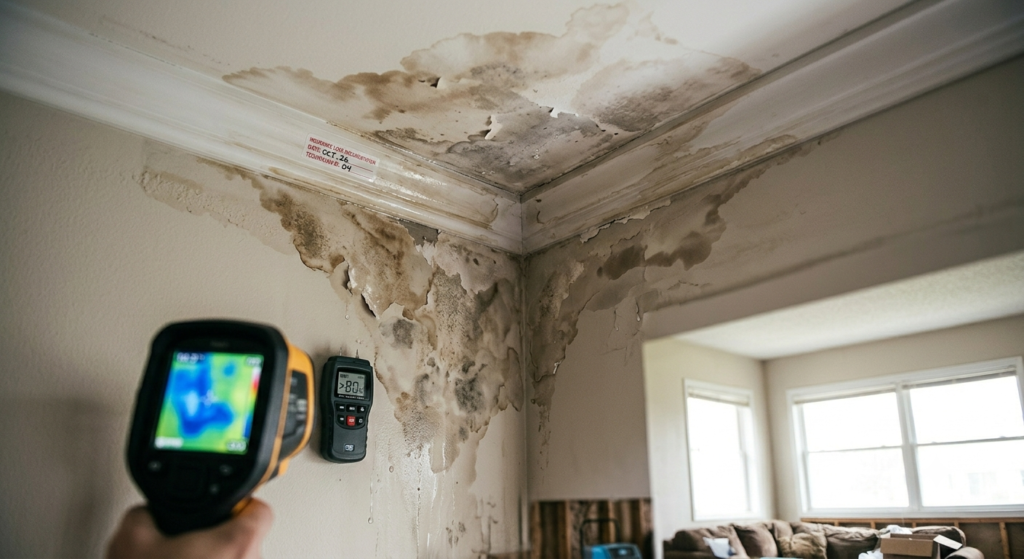
In our experience at Daytona Beach Water Damage, the ‘why’ often ties back to Florida’s building codes, which prioritize hurricane resistance but sometimes overlook long-term moisture control in interiors. Homes built pre-2000s, common in North Village, are particularly vulnerable due to less advanced vapor barriers. Understanding these mechanics isn’t just academic-it’s crucial for early intervention. For instance, thermal imaging during moisture mapping reveals hidden spread that visual inspections miss, allowing us to target restoration precisely.
This spread isn’t linear; it’s exponential. A single gallon of water can affect over 100 square feet in porous materials, and in Florida’s climate, drying times extend due to ambient humidity. By grasping these pathways, homeowners can shift from reactive fixes to proactive safeguards, preserving their home’s integrity.
Practical Tips to Detect and Stop Water Damage Spread
Preventing water damage from spreading requires vigilance and quick action, tailored to Florida’s unique challenges like seasonal hurricanes and sandy soils that shift foundations. Start by scheduling regular inspections, especially after heavy rains common in Daytona Beach. Use a moisture meter-available at hardware stores for under $50-to check high-risk areas like basements, attents, and around windows.
Actionable steps include:
- Monitor and Seal Entry Points: Inspect roofs, gutters, and downspouts annually. In Daytona Beach’s windy conditions, loose flashing can allow water ingress. Seal cracks in foundations with hydraulic cement to block subsurface moisture.
- Upgrade Plumbing Fixtures: Install leak detectors on appliances like washers and refrigerators. For local relevance, Florida’s hard water can corrode pipes faster, so consider appliance leak cleanup services if you notice drips.
- Improve Ventilation: Use dehumidifiers in humid areas; aim for 30-50% indoor humidity. In crawlspaces, crawlspace encapsulation with vapor barriers prevents ground moisture from rising, a must in Florida’s high water table regions like Faulkner.
- Emergency Response Plan: Keep towels, fans, and a wet-dry vac handy. If flooding occurs, shut off the main water supply and electricity to affected areas to halt spread and reduce risks.
Local factors play a big role: Daytona Beach’s proximity to the ocean means salt air accelerates corrosion, while hurricane-season preparedness involves elevating HVAC units. Regulations from Volusia County require specific flood zoning, so check your property’s elevation certificate for vulnerabilities.
Pro Tip: An insider secret from our team-always check for ‘secondary leaks’ during initial cleanup. Water often hides in ceiling voids after roof damage; using infrared cameras early can prevent mold from spreading to HVAC ducts, saving up to 40% on restoration costs.
Implementing these tips empowers you to catch issues early. For example, in Gray Hawk neighborhoods with older ranch-style homes, focusing on attic ventilation has stopped many potential spreads we’ve handled. Consistency is key; a little effort now avoids overwhelming damage later.
Common Mistakes Homeowners Make with Water Damage Spread
Homeowners often underestimate how quickly water damage escalates, leading to avoidable pitfalls. One frequent error is delaying professional help, thinking a fan or shop vac will suffice. In reality, surface drying ignores hidden moisture in walls, allowing mold to thrive within days-Florida’s warmth speeds this to 24 hours. This not only risks health issues like respiratory problems but also structural failure, with repair costs ballooning from $1,000 to $10,000+.
Another mistake: Ignoring small leaks, like from a dripping faucet or AC unit. These ‘slow drips’ accumulate, spreading via capillary action to weaken joists and invite pests. In Daytona Beach’s humid environment, untreated AC condensation can lead to widespread floor damage, violating local building codes and complicating insurance claims.
Finally, improper cleanup exacerbates spread. Using household cleaners on wet areas can push contaminants deeper, or skipping containment allows vapor to migrate. We’ve seen financial hits from denied claims due to ‘negligent mitigation,’ plus safety dangers like electrical shorts in soaked outlets.
Avoid these by acting fast and consulting experts. Learn more about our approach on our About Us page.
Water damage spreads stealthily, but armed with knowledge of its pathways, detection methods, and prevention strategies, you can protect your Florida home effectively. Key takeaways: Act within the first 24 hours, prioritize hidden areas, and tailor solutions to local conditions like humidity and storms. While DIY steps help, complex cases demand pros to ensure thorough restoration.
If water damage has struck your Daytona Beach property, don’t risk further spread-trust the local experts at Daytona Beach Water Damage. Our team specializes in swift, comprehensive solutions to restore your home safely. Visit our homepage for more resources. Need help with water damage restoration in Daytona Beach? Call Daytona Beach Water Damage today at (386) 715-1179.
Leave a Reply