Imagine returning home to a damp, earthy scent that lingers in the air, turning your sanctuary into an uncomfortable space. That musty odor after a water leak isn’t just unpleasant—it’s a sign of hidden damage that can lead to serious health and structural issues. At Daytona Beach Water Damage, we’ve helped countless homeowners in Daytona Beach, FL, tackle this exact problem, restoring their properties to pristine condition. In this guide, we’ll break down why these smells develop and provide clear steps to address them, empowering you to act quickly and confidently. Whether it’s from a burst pipe or heavy rains common in our coastal area, understanding water damage odors is the first step to prevention and recovery.
Understanding the Science Behind Musty Water Damage Odors
Water damage odors, often described as musty or mildew-like, arise when moisture infiltrates your home and creates the perfect breeding ground for mold and bacteria. After a leak, water seeps into walls, floors, and ceilings, where it evaporates slowly, leaving behind humidity that promotes microbial growth. This process isn’t immediate; it can take 24-48 hours for odors to become noticeable, but the damage starts right away.
At its core, the musty smell comes from volatile organic compounds (VOCs) released by mold spores and decaying organic matter. Mold thrives in dark, damp environments with temperatures between 60-80°F, which is common in Florida homes. Bacteria, like those in sewage backups, add a rotten egg or sewage scent due to hydrogen sulfide production.
Here’s a breakdown of key factors contributing to these odors:
- Moisture Source and Duration: Standing water from leaks allows organic materials like wood or drywall to break down, releasing earthy smells. The longer it sits, the worse it gets.
- Mold Types Involved: Common culprits include Aspergillus and Penicillium, which produce a musty aroma as they colonize surfaces. Black mold (Stachybotrys) can introduce a sharper, more pungent odor.
- Environmental Influences: In Daytona Beach, high humidity from ocean breezes exacerbates the issue, trapping moisture indoors and accelerating odor development.
- Hidden Growth Areas: Odors often signal mold behind walls or under carpets, invisible to the eye but potent in scent.
In our experience at Daytona Beach Water Damage, we’ve seen how quickly these odors spread in older homes with poor ventilation, like those in the Sugar Mill area. Early detection through professional assessment is crucial—delaying can lead to respiratory problems and costly repairs. By understanding this science, homeowners can move from confusion to control, preventing minor leaks from becoming major hazards.
This explanation demystifies the ‘why’ behind the smell, showing it’s not just a surface issue but a symptom of deeper water intrusion. For instance, if a leak affects your HVAC system, odors can circulate throughout the house, mimicking a whole-home problem. Our team uses advanced tools like moisture meters and air quality tests to pinpoint sources accurately, ensuring thorough remediation.
Step-by-Step Guide to Eliminating Musty Odors from Water Damage
Addressing water damage odors requires a systematic approach: identify, remove moisture, clean, and prevent recurrence. Start by assessing the affected area—look for discoloration, warping, or soft spots on surfaces. In Daytona Beach, where summer storms are frequent, leaks often stem from roof issues or plumbing failures in coastal properties.
Actionable steps include:
-
Stop the Source: Turn off water if possible and fix the leak immediately. For hidden issues, consider a water damage inspection to locate moisture without guesswork.
-
Extract Water: Use wet vacuums or pumps for standing water. In humid areas like Pelican Bay, dehumidifiers are essential to pull excess moisture from the air.
-
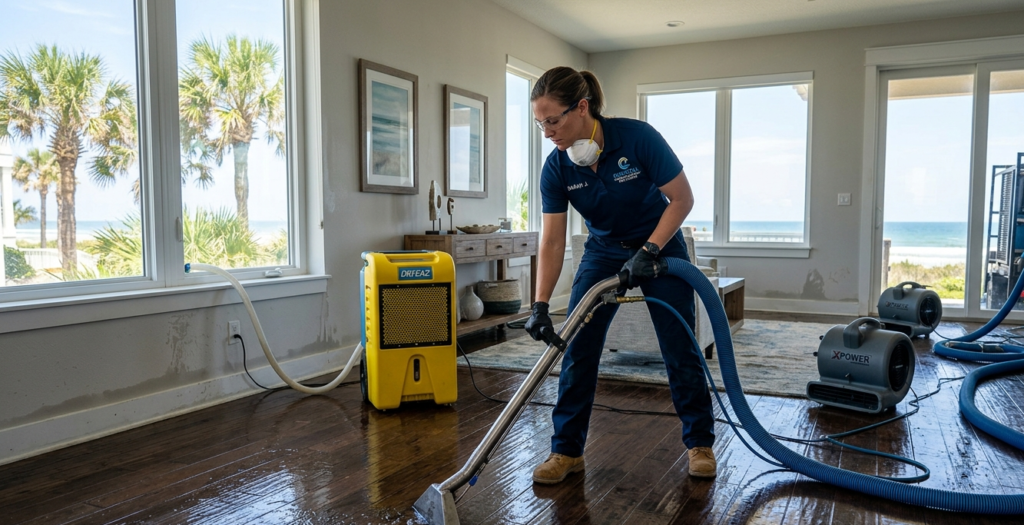
Dry Thoroughly: Fans and dehumidifiers should run for 48-72 hours. Aim for under 15% moisture content in materials to halt mold growth.
-
Clean and Disinfect: Scrub visible mold with a bleach solution (1 cup bleach per gallon of water), but wear protective gear. For deeper cleaning, HEPA vacuums remove spores effectively.
- Odor Neutralization: Baking soda or activated charcoal absorbers can tackle smells, but for severe cases, ozone generators or professional antimicrobial treatments work best.
Local factors in Daytona Beach play a big role—our sandy soil and frequent rains mean basements and crawl spaces are prone to flooding, amplifying odors. Florida building codes require specific ventilation standards, so ensure your home complies to avoid regulatory fines during repairs.
Pro Tip: An insider secret from our restoration experts: After drying, apply an EPA-approved mold inhibitor to surfaces. This prevents regrowth in Florida’s humid climate, saving you from repeat issues. Always test a small area first to avoid discoloration.
By following these steps, you can restore freshness and protect your health. If odors persist, it may indicate structural damage needing pros—our virus & bacteria disinfection service ensures complete sanitation.
Common Mistakes Homeowners Make with Water Damage Odors
Many Daytona Beach residents underestimate musty odors, thinking they’ll fade naturally, but this oversight can escalate problems. One frequent error is ignoring the smell and using air fresheners or candles to mask it. While this provides temporary relief, it doesn’t address the root cause—mold continues growing, potentially releasing mycotoxins that irritate lungs and cause allergies.
Another pitfall: Attempting DIY fixes without proper drying. Homeowners often wipe surfaces and call it done, but residual moisture leads to hidden mold behind drywall, resulting in health risks like asthma flare-ups and structural weakening. Financially, this can balloon repair costs from $500 for minor cleanup to over $10,000 for extensive remediation.
Skipping professional help is common too, especially in areas like Inlet Shores where beachfront homes face salt corrosion accelerating damage. Without tools like thermal imaging, you miss pockets of dampness, allowing odors to return stronger.
Safety-wise, entering flooded areas without precautions exposes you to electrical hazards or contaminated water, common after hurricanes here. Always prioritize evacuation if sewage is involved to avoid bacterial infections.
Avoid these by acting fast and consulting experts early—delaying not only worsens smells but devalues your property, as unresolved water damage scares buyers.
Wrapping Up: Banish Musty Odors and Protect Your Home
Water damage odors signal more than inconvenience; they’re warnings of mold, bacteria, and potential health threats. By grasping the science—moisture fostering microbial growth—and applying practical steps like thorough drying and cleaning, you can reclaim a fresh home. Remember, local Daytona Beach conditions like humidity demand vigilant maintenance to prevent leaks from turning musty.
Key takeaways: Act within 24 hours, use proper tools for drying, and avoid masking symptoms. For peace of mind, especially in flood-prone spots, professional intervention ensures complete restoration without risks.
If tackling water damage odors feels overwhelming, Daytona Beach Water Damage is here to help. Our experienced team handles everything from inspection to full cleanup, tailored to Florida’s unique challenges. Visit our about us page to learn more about our commitment to the community.
Need help with water damage odors in Daytona Beach? Call Daytona Beach Water Damage today at (386) 715-1179.
Leave a Reply