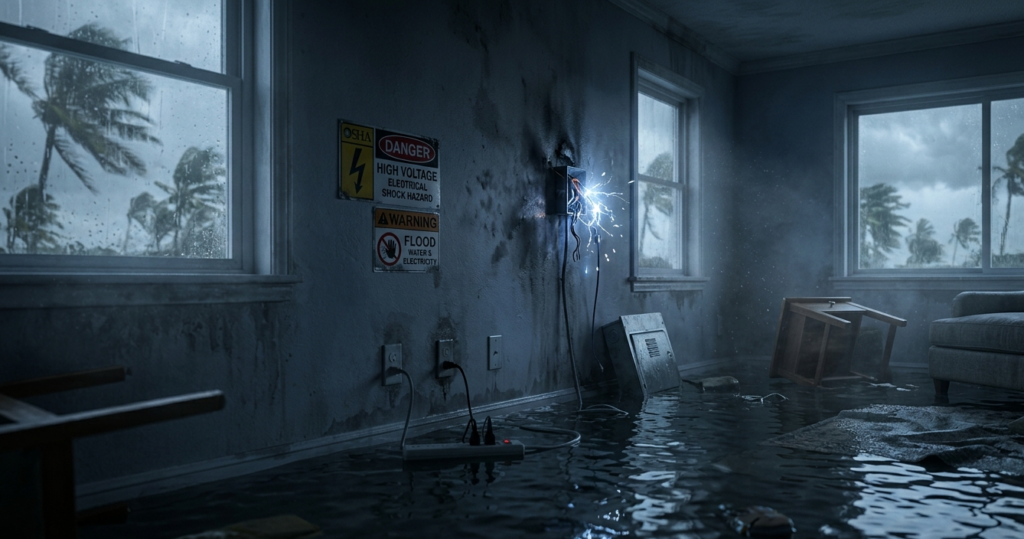
Imagine returning home after a heavy rainstorm in Daytona Beach to find water pooling in your basement, only to realize it’s seeping toward your electrical outlets. This scenario isn’t uncommon here, where coastal humidity and sudden downpours can turn minor leaks into major threats. Water damage doesn’t just ruin floors and walls—it can create deadly electrical hazards, potentially igniting fires that endanger lives and property. At Daytona Beach Water Damage, we’ve responded to countless calls from Central Daytona residents facing this exact issue, often after unnoticed pipe bursts or storm surges. In this post, we’ll break down how water and electricity mix so dangerously, why it’s a growing concern in our area, and what you can do to prevent it. By understanding these risks, you can protect your family and avoid costly repairs. Whether it’s a slow drip or a flood, acting fast is key to safety.
How Water Damage Leads to Electrical Fires
Water and electricity are a volatile combination, and when water infiltrates electrical systems, it can create pathways for short circuits that generate intense heat—enough to spark flames. This isn’t just theory; it’s a real danger backed by fire safety experts and our hands-on experience in restoration. At its core, water acts as a conductor, lowering the resistance in wiring and appliances, which forces more current to flow and overheats components. Over time, this corrosion weakens insulation, leading to arcing—tiny sparks that can ignite nearby flammable materials like drywall or insulation.
To understand why this happens, consider the science: Electrical fires from water damage often stem from corrosion. When moisture contacts metal parts, it triggers oxidation, forming rust that disrupts normal current flow. In humid environments like Daytona Beach, this process accelerates, especially during hurricane season when flooding is rampant.
Here’s a breakdown of the key mechanisms:
- Short Circuits: Water bridges the gap between positive and negative wires, creating an unintended path for electricity. This surge can melt wires instantly, starting a fire.
- Ground Faults: In outlets or panels, water can cause electricity to seek the path of least resistance to the ground, overloading the system and producing heat.
- Appliance Failures: Wet vacuums, washers, or HVAC units can malfunction, with internal shorts igniting dry components inside.
- Hidden Wiring Damage: Water behind walls erodes insulation over days or weeks, turning safe circuits into fire starters without visible signs.
Statistics from the National Fire Protection Association show that electrical malfunctions cause over 50,000 home fires annually in the US, with water-related incidents making up a significant portion—especially in flood-prone areas. In our experience at Daytona Beach Water Damage, we’ve seen this play out repeatedly in older homes around Inlet Shores, where aging infrastructure meets salty coastal air, speeding up corrosion. One case involved a family whose post-storm leak went undetected for a week, resulting in a kitchen fire from corroded outlets. Early detection through professional emergency water extraction could have prevented it entirely. Understanding these ‘what’ and ‘why’ factors empowers homeowners to spot risks early and mitigate them before they escalate.
Practical Tips to Prevent Water Damage from Causing Electrical Fires
Preventing electrical fires starts with proactive water management, tailored to Daytona Beach’s unique challenges like frequent thunderstorms, high humidity, and proximity to the ocean. Our coastal location means salt-laden air can exacerbate corrosion, so vigilance is essential. Here are actionable steps to safeguard your property:
-
Inspect Regularly: Check basements, attics, and crawl spaces monthly for moisture. In Daytona Beach, focus on areas prone to hurricane runoff. Use a moisture meter—available at hardware stores—to detect hidden dampness near electrical panels.
-
Elevate and Seal: Raise outlets and switches in flood-risk zones at least 18 inches off the floor, per local building codes. Seal gaps around pipes and windows with silicone caulk to block water entry. For older homes in Daytona Beach Shores, consider upgrading to GFCI (Ground Fault Circuit Interrupter) outlets, which shut off power if water is detected.
-
Maintain Plumbing: Address leaks promptly. Install water sensors on pipes under sinks and near water heaters. In our humid climate, even minor drips from pipe leak detection and cleanup can lead to big problems—schedule annual inspections to catch issues early.
-
Appliance Care: Keep washers, dryers, and refrigerators away from moisture sources. Ensure hoses are drip-free and use surge protectors. After heavy rains, unplug non-essential appliances until everything dries.
- Professional Help: If you’ve had water exposure, don’t DIY electrical checks—call experts. Post-flood, drying out wiring requires specialized equipment to avoid incomplete removal of moisture, which invites mold and further risks.
Local factors amplify these needs: Volusia County regulations require specific flood-proofing in low-lying areas like Harbour Beach, and our sandy soil drains poorly during storms, pooling water near foundations. Integrating smart home tech, like leak detectors linked to your phone, can provide real-time alerts.
Pro Tip: If you suspect water near electrical areas, turn off the main breaker immediately and avoid touching outlets—even if they seem dry. This ‘insider secret’ from our team has prevented many close calls; always prioritize power isolation over quick fixes to avert shocks or sparks.
By implementing these tips, you reduce risks significantly and maintain compliance with Florida’s stringent safety standards.
Common Mistakes to Avoid with Water Damage and Electrical Safety
Homeowners in Daytona Beach often underestimate water damage’s electrical implications, leading to preventable disasters. One frequent error is ignoring small leaks, thinking they’ll dry on their own. A dripping faucet or roof leak might seem minor, but over time, it corrodes wiring, costing thousands in fire damage—insurance claims for such incidents average $45,000, per NFPA data, not to mention health risks from smoke inhalation.
Another pitfall: Attempting DIY cleanups without shutting off power. Touching wet outlets or using extension cords in damp areas can cause immediate shocks or shorts. We’ve seen business owners in Gray Hawk delay professional help, resulting in mold growth alongside electrical hazards, amplifying repair costs by 30-50%.
Relying on fans or dehumidifiers alone for drying is also misguided. These tools can’t reach behind walls or into outlets, leaving moisture that fosters corrosion. Safety-wise, this invites arcing faults; financially, it voids warranties on appliances and hikes energy bills from inefficient systems.
Finally, neglecting post-storm assessments is risky in our area. After events like Tropical Storm Gabrielle, residents skip thorough checks, only to face fires months later from undetected damage. The risks? Evacuations, structural losses, and legal liabilities if injuries occur. Always consult pros like those at Daytona Beach Water Damage to avoid these costly oversights.
Conclusion
Water damage can indeed cause electrical fires through corrosion, shorts, and hidden moisture buildup, a threat heightened in Daytona Beach by our weather patterns. Key takeaways include regular inspections, sealing vulnerabilities, and swift professional intervention to prevent escalation. By staying informed and proactive, you protect your home and loved ones from these dangers.
If dealing with water issues feels overwhelming, Daytona Beach Water Damage is here to help with expert restoration tailored to our local needs. Our team handles everything from extraction to safety checks, ensuring your property is secure. Need help with water damage and electrical fire risks in Daytona Beach? Call Daytona Beach Water Damage today at (386) 715-1179.
Leave a Reply